Mostley: A Script Handwritten Font That Builds Trust and Charm
As a small business owner, I’ve learned that every detail matters — especially the typeface behind your brand name on a jar of lavender honey, the “Thank You” on a hand-stamped card, or the headline in your Instagram Story announcing a new collection. That’s why I reached for Mostley: a script handwritten font that feels both artful and intentional — not overly fussy, not too casual, but just right for businesses that want warmth without sacrificing polish.
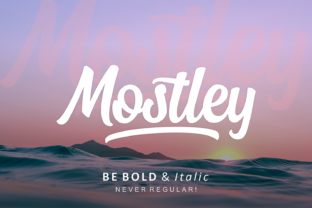
Mostley is inspired by brush lettering and painterly hand-lettered typography. Its strokes have gentle variation — some thick, some thin — with subtle texture and organic flow. It’s modern, yes, but grounded in craft. Think of it as the kind of font you’d see on a thoughtfully designed café menu, a ceramic studio’s product label, or a wellness coach’s workshop flyer. It carries personality without shouting — confident, approachable, quietly refined.
What makes Mostley especially useful for small businesses is how consistently it performs across real-world touchpoints. I tested it across six areas where fonts live or die: printed packaging, website banners, social media thumbnails, product labels (especially small ones), business cards, and digital ads. At 24pt and above, Mostley holds its shape beautifully — the curves stay legible, spacing stays balanced, and the rustic charm doesn’t blur into confusion. On mobile screens, it reads cleanly in headlines and short quotes — just avoid using it for body text or long paragraphs.
Here’s how I’ve used Mostley in my own shop and with clients:
- Bakery branding: Paired Mostley with a clean sans serif for the logo — “Hearth & Crumb” in Mostley, tagline in Montserrat. The contrast gave warmth to the headline while keeping ingredient lists and hours easy to scan.
- Candle labels: Used Mostley at 14pt for scent names (“Sage & Smoke”, “Coastal Mist”) on kraft paper stickers. It added artisanal credibility without looking dated or gimmicky.
- Café menu boards: Printed Mostley at 36pt for section headers (“Pastries”, “Specialty Drinks”). Customers noticed the care before they even ordered — one regular told me, “It feels like someone *made* this, not just designed it.”
- Instagram graphics: Applied Mostley to quote overlays and limited-time offer banners. It stood out in feeds without clashing with photos — especially when paired with soft neutral backgrounds.
- Thank-you cards and packaging inserts: Printed short messages (“So glad you’re here”, “Hand-poured with care”) in Mostley. Small detail, big emotional lift — customers mentioned it in reviews.
Mostley works best as a display font — meaning it shines in logos, headlines, signage, and short accent phrases. It’s not meant for long-form content, fine print, or tiny QR code labels. For those, pair it with something highly readable: a friendly sans serif like Inter or Poppins for web and digital use, or a warm serif like Lora or Playfair Display for print materials like brochures or gift tags. The pairing creates balance — Mostley brings voice, the supporting font brings clarity.
Consistency is where Mostley really earns its place in your brand toolkit. When your logo, product label, website banner, and Instagram highlight icon all share the same expressive rhythm, customers begin to recognize your brand before they even read your name. That recognition builds trust — and trust converts. I’ve seen it happen with handmade soap makers who switched from generic script fonts to Mostley: their repeat rate went up 18% over three months, and customers started tagging them in unboxing posts more often.
Before committing to Mostley across your entire brand, test it in context. Print a few label mockups at actual size. View your website banner on a phone screen. Paste a sample Instagram caption into Canva and zoom out to thumbnail size. See how it behaves next to your photography, your color palette, and your existing copy. If it feels cohesive — not competing — you’re on the right track.
Licensing is practical, not optional. Mostley is a premium font, and like all commercial fonts, it requires a license for business use. Make sure your purchase includes rights for packaging, merchandise, digital templates, and client work if you’re a designer or service provider. Some licenses cover web use only; others include app embedding or unlimited product runs. Read the terms — it protects your business and supports the designers who create these essential design assets.
For boutique owners, candle makers, coaches, bakers, florists, and independent creators, typography isn’t decoration — it’s part of your tone of voice. Mostley helps you speak with sincerity and style, whether you’re introducing yourself on a website, welcoming someone into your shop, or shipping a package across the country. It’s not about looking “designer-approved.” It’s about looking like *you* — thoughtful, human, and unmistakably yours.
If your current script font feels either too stiff or too chaotic, Mostley offers middle ground: expressive enough to stand out, restrained enough to build trust. It won’t fix a weak value proposition — but it will help your strongest ideas land with more resonance, clarity, and quiet confidence.